

Gravetye’s Historic Woodland
We are protecting biodiversity, practicing sustainable forestry, and encouraging hands-on community conservation.
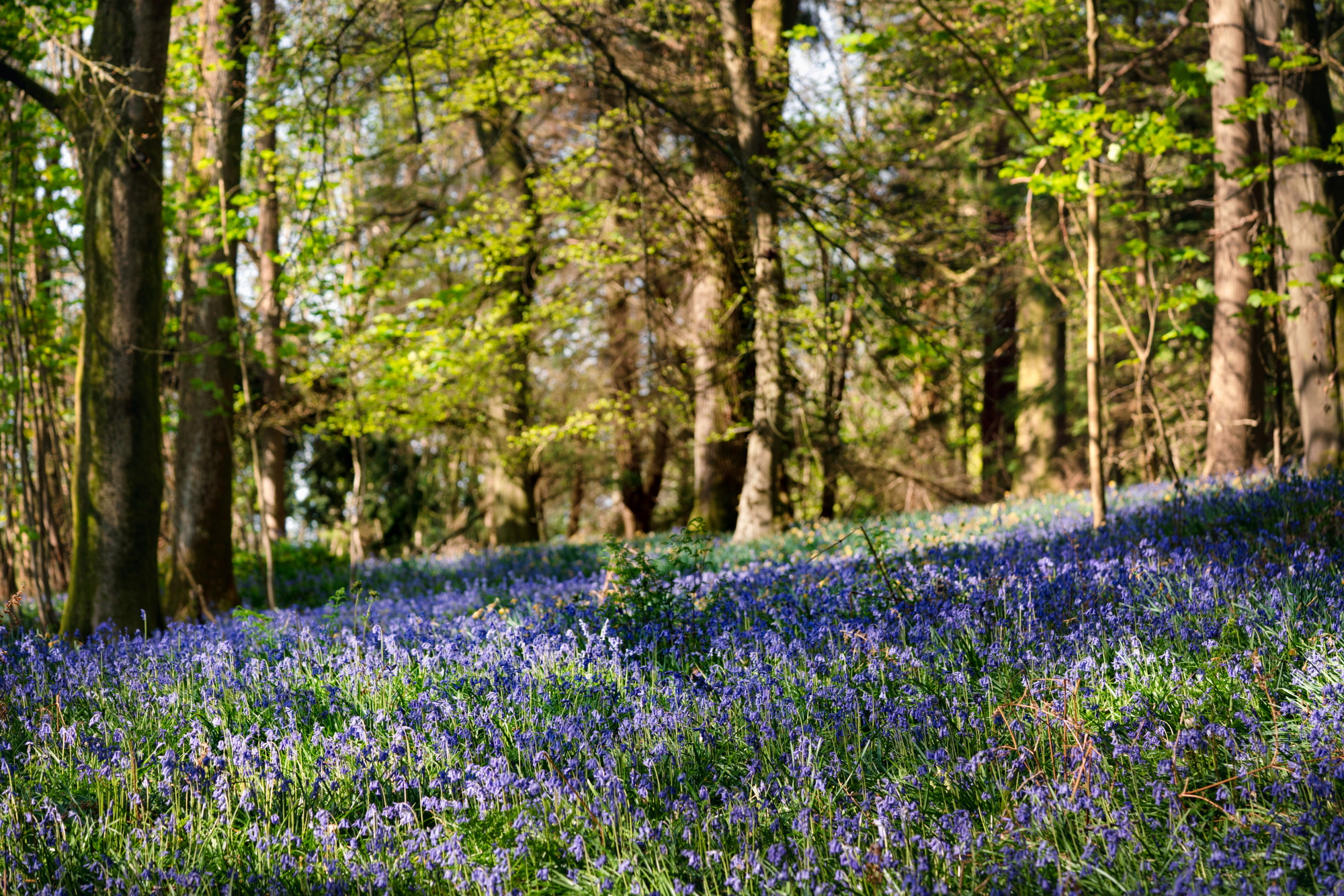
The woodland across the Gravetye Estate has been actively managed for centuries—from producing charcoal for the Sussex iron industry in the 16th century to supplying sustainable timber for fencing and construction today.
Today, our woodland plays a vital role in mitigating the effects of climate change and tree disease, while providing an accessible, rich landscape for people of all ages to explore and enjoy.
Our Core Forestry Objectives
- Social: Providing extensive, safe public access with all the health and wellbeing benefits it brings, alongside practical conservation opportunities for people of all ages and abilities.
- Environmental: Preserving healthy soils, capturing carbon, enhancing wildlife habitats, upholding strict biosecurity practices, improving structural diversity, and supporting water management.
- Economic: Producing high-quality timber from conifer and broadleaf species to support UK timber security while generating income that allows the charity to safeguard Gravetye’s woodland for future generations.
Creating a Resilient, Biodiverse Landscape
In partnership with English Woodlands Forestry, our long-term forestry management plan focuses on creating a woodland with a varied canopy structure and a rich blend of species. We actively manage young, mature, and veteran trees, standing and fallen deadwood, open woodland edges, and areas of natural regeneration.
Productive forestry often requires significant machinery, which can temporarily change the look of the landscape. However, carefully removing select trees lets essential light reach the forest floor. This promotes ground flora, encourages natural sapling growth, and allows remaining trees to reach their full potential.
We are gradually transforming much of our woodland into a Continuous Cover Forestry system. Rather than clear-felling large areas, we selectively remove small groups of trees. This creates light gaps in the canopy where natural regeneration can take hold or where we can introduce new tree species.
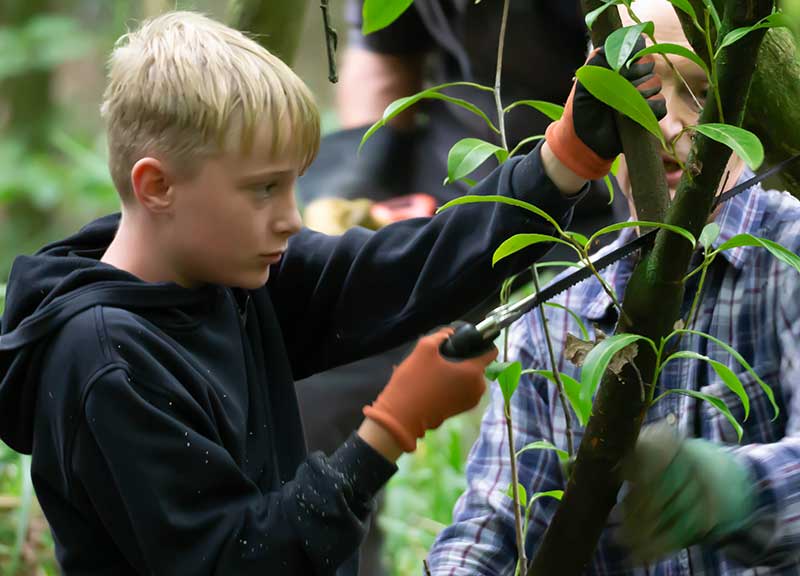
Community in Action: Volunteers play a crucial role in building a resilient woodland. From caring for young trees and coppicing hazel and sycamore to removing invasive species like rhododendron and laurel, our volunteers actively help build habitats for local wildlife.
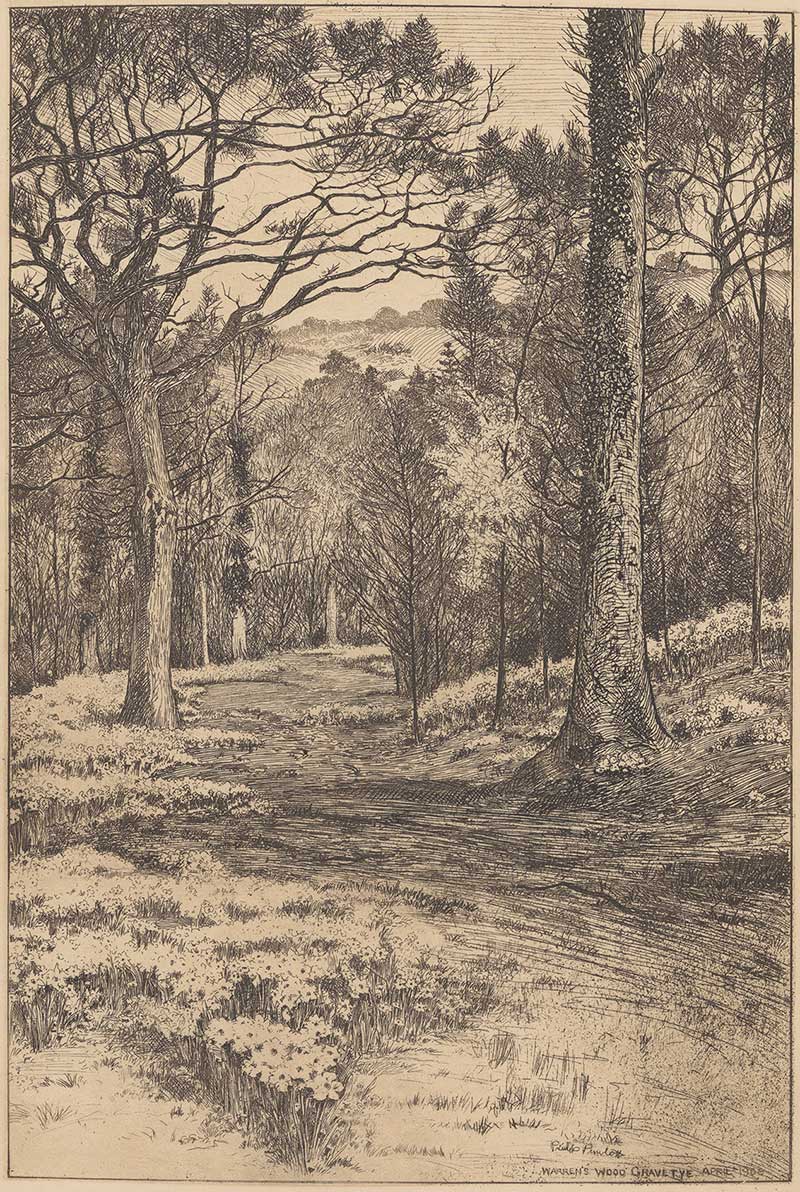
“The woodlands should be a sanctuary for birds, foxes, badgers and the like”
 William Robinson’s will 1935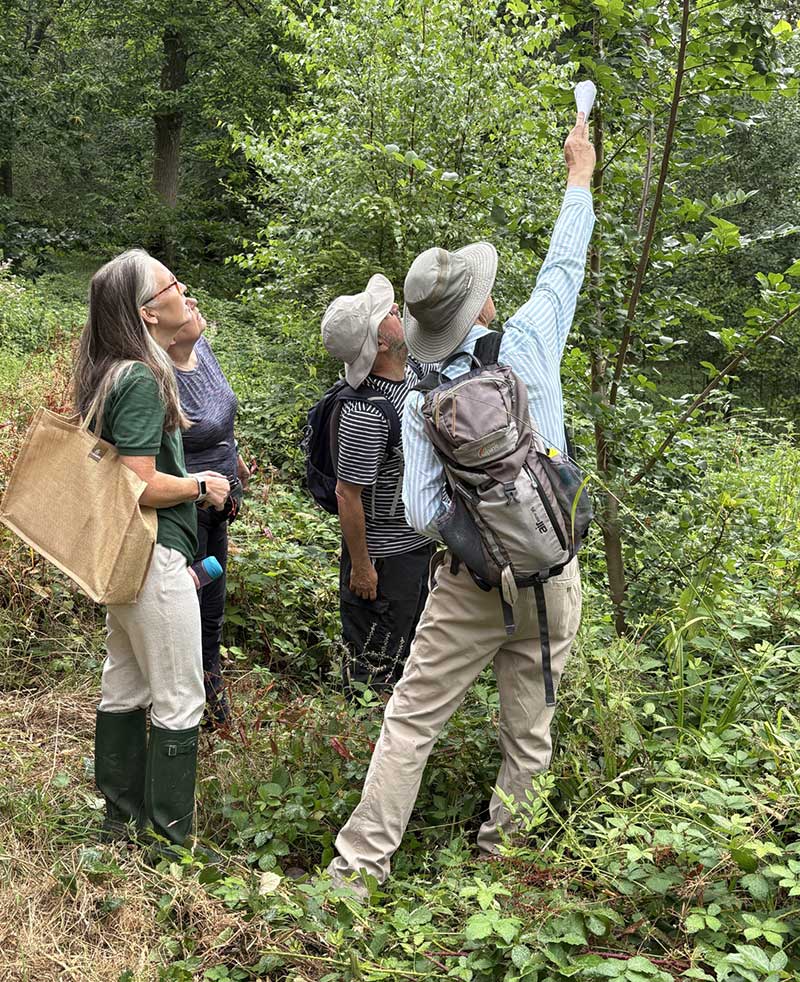
Conifers & Broadleaves: Species Choices for the Future
Currently, English Oak, Corsican Pine, and Silver Birch account for nearly half of our trees. This reliance leaves the woodland vulnerable to pests, diseases, and extreme weather. Recent outbreaks of Ash Dieback and the Eight-Toothed Spruce Bark Beetle (Ips typographus) have already impacted ash and spruce stands, and warmer, wetter weather brings further threats.
To build climate resilience, we are gradually diversifying our woodland with a broader range of species, including Sweet Chestnut, Douglas Fir, Red Alder, Hornbeam, Japanese Red Cedar and Small-leaved Lime.
This approach honours William Robinson’s original vision: planting fast-growing conifers for timber alongside diverse broadleaves for beauty and wildlife.
Our Partners
Alongside the deep expertise within our Trustee board and woodland managers at English Woodlands Forestry, we collaborate with key partners:
Partnering on the Horizons project to research climate-resilient forestry practices and future tree species suitability.

Working with a national network of tree health citizen scientists to spot pests and diseases early and maintain high standards of biosecurity.

eForests has donated thousands of saplings for volunteers to plant – thank you
Together, these partnerships help us monitor, manage, and preserve our woodlands. We are immensely grateful for their continued guidance and support.